
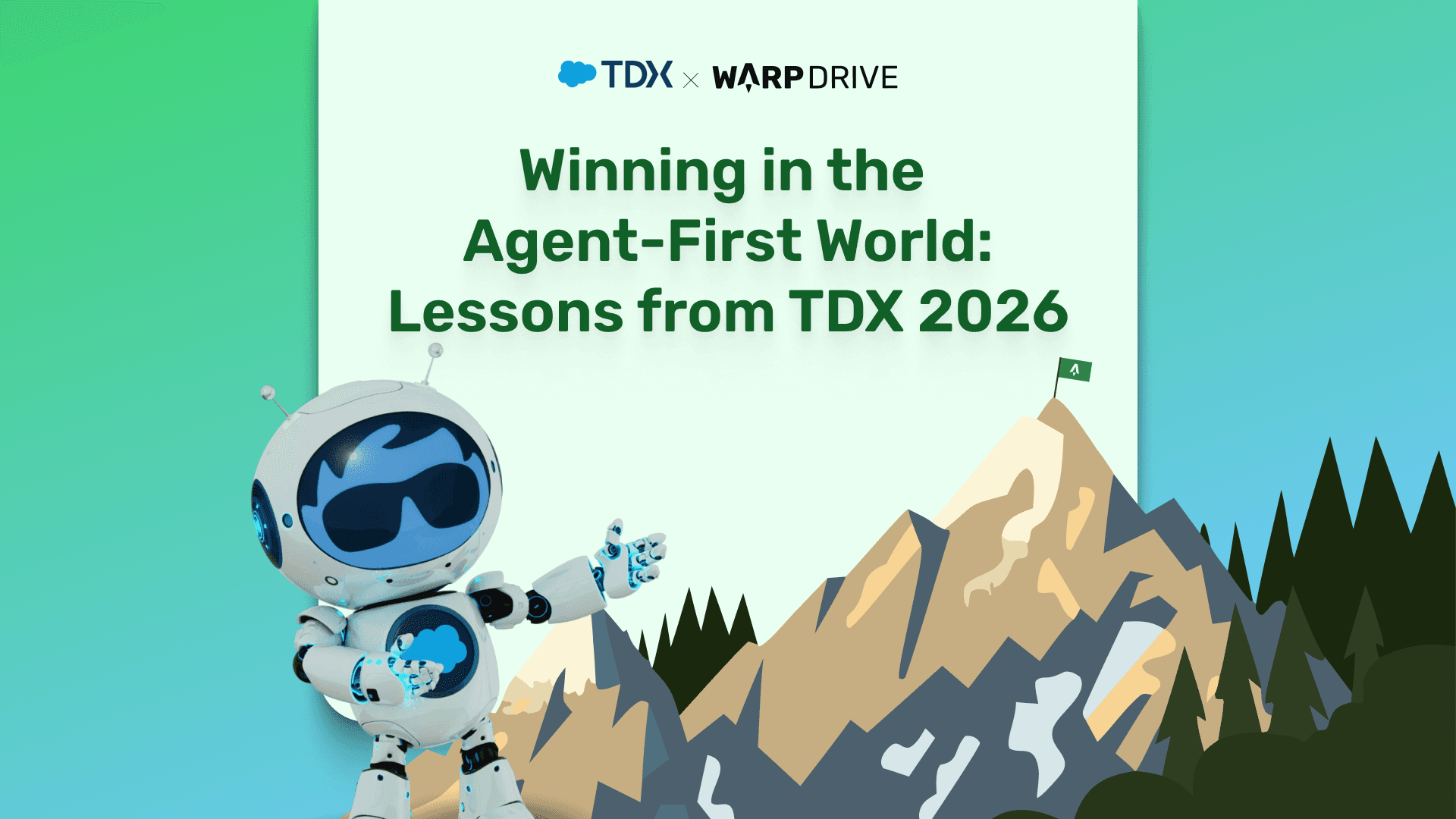
TDX 2026, Salesforce’s flagship developer conference held on April 15 to 16 in San Francisco, brought together the latest innovations in Agentic AI, Data 360, and the Agentforce 360 platform, marking the beginning of a major shift toward a more agent-first, platform-driven future.
Salesforce Headless 360: Three Major Innovations
- New MCP tools and enhanced coding capabilities that allow coding agents full, native access to the Salesforce platform
- A unified experience layer capable of rendering rich, native interactions across every surface including Slack, voice interfaces, WhatsApp, and more
- Advanced governance tools that give teams precise control over agent behaviour both before deployment and in production
With these innovations, agents can now orchestrate applications, workflows, and business logic without requiring any of it to be rebuilt. Humans and AI agents share the same fundamental needs: access to data, workflows, and a trusted foundation.
Why the Platform Just Became More Important Than the UI
Salesforce’s Headless 360 signals a shift to an agent-first, multi-surface world where the platform, not any single UI, becomes the centre of gravity. MCP plus coding upgrades give coding agents native access to Salesforce data, APIs, and workflows. The experience layer lets you define rich interactions once and render them across Slack, Teams, web, mobile, voice, and WhatsApp. Governance tools provide finer control of agent behaviour pre-deployment and in production.
Next-Generation Developer Tools
Agentforce Vibes 2.0
Developers can now natively use Anthropic and OpenAI SDKs within their environments to build, test, and evaluate code in agentic workflows. Salesforce has embraced model choice, allowing developers to use their preferred LLM. The CLI has reclaimed a central role in the development experience.
Agent Script
Agent Script introduces a single, versionable flat file that enforces organisational guardrails for AI agents. This ensures deterministic execution and provides a trusted mechanism for routing complex tasks. Salesforce has open-sourced the specification, enabling other AI systems to generate or refine scripts and accelerating agents building agents.
Agentforce Experience Layer
Builders can define a UI component once and deploy it everywhere including web, mobile, Slack, Microsoft Teams, and ChatGPT. This approach embeds branded, rich interactions directly into users existing workflows, marking a major shift in Salesforce’s UI and development strategy.
Six Key Takeaways from TDX 2026
- UI Deprioritisation: Traditional Salesforce UI customisation is becoming less central. Meeting users where they work matters more than perfecting in-app pages.
- Channel-First Strategy: The priority shifts from pulling users into Salesforce to bringing Salesforce into Slack, Teams, and voice environments.
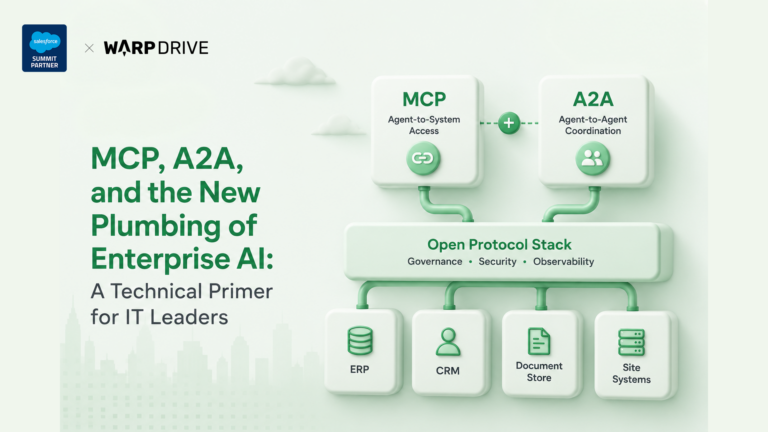
- Integrations Everywhere: Every system becomes an MCP or API provider and consumer, with AI simplifying how tools connect.
- Data at the Core: Data 360 remains central. Salesforce’s durable advantage is managing, processing, and activating meaningful business data.
- Hybrid Agents Win: Agent Script’s deterministic flows plus probabilistic LLMs reflect a pragmatic push for accuracy alongside intelligence.
- Agent Script Goes Open Source: Stronger IDE tooling, production feedback loops, and unified text-and-voice control make this a significant ecosystem move.
At WarpDrive, we are already implementing Agentforce and headless Salesforce architectures, moving teams from experimentation to production-ready agent systems.